
 Posts
Posts


After six
years of incredible cycling experiences, ibikelondon blog is coming to a close.
I want to highlight where I have been, where I am going, and to say thank you for
coming along for the ride.
I began
writing about riding in London in 2009. I hardly expected then ibikelondon would
become such a big part of my life. My
first post had just ten readers, and included a photo of me participating in a
Skyride on a very rusty, very purple second-hand bike. Over 500 blog posts later and thankfully my wheels
have improved - and so has London.
If you know
me via Twitter you’ll have seen clues that change is coming. Starting any new venture is daunting, but
I’ve been preparing to make this move for a while. I worked
hard on building this, I’m excited to share it with you, and I hope you’ll be
as excited using it as I have been creating it.
@markbikeslondon
will shortly become @StrategicCities, and you’ll be able to find me at my new
website; strategic-cities.com

With some of you on Blackfriars Bridge in 2011.
I’ll still
be looking at how people travel, and how cities can become increasingly
efficient and liveable, but my focus will be wider than just the bike. I’ve come to realise bikes are the “canary in
the coal mine” of liveable cities, and there are many issues – childhood
freedom, planning, obesity, transport – which are all part of the same urban
matrix we call home, and which deserve further scrutiny.
StrategicCities will also see me start a new career. I’ll soon be delivering training for urban
professionals and communications analysis for city leaders. Why?
I’ve been fortunate enough to work in the media from the inside - as
well as influence it from the out - and my experience has shown me that the way
we convey messages is more and more important in delivering difficult projects.
You only need to look at the vociferous – and frequently hysterical – anti-bike
lane sentiment we’ve experienced in London.
Communicating well in a difficult environment is not a skill which comes
naturally to most, but preparation goes a long way in helping to navigate that
minefield. My first web-based training seminar;
“Achieving Change In A Hostile Media Environment” takes place in May and registration
is open. If you want to keep up to date
about further events and training then you can sign up to the Strategic Citiesmailing list, or connect with me on LinkedIn.
ibikelondon
has given me incredible opportunities. I’ve given evidence at Parliament,
lectured at the National Conference for Urban Design at Oxford University and
written for national newspapers about cycling and cities. I even appeared on Newsnight and Russian state radio. Blogging takes (a lot of) time, effort and
patience, but I’ve had fantastic experiences by bicycle along the way as well;
from riding through backstreets in Shanghai, to chasing the Tour de France
through Belgium in a helicopter. More
amazing things than I could ever have imagined when I wrote that first post
back in 2009.
There have
been tough times, too. I’ve stood beside
dangerous junctions as grieving relatives mark the site of a loved one’s death
too many times. Too often I’ve written
about poorly designed, poorly driven lorries in London, and the fatal problems
they present. And too often I’ve written
how someone has died on an appallingly designed stretch of road which
authorities had been warned in advance would lead to fatalities.
Two terrible
weeks in 2013 saw six London cyclists lose their lives in rapid succession on
our roads. Those missing riders marked a
shadow for a long time afterwards, when the bus seemed more appealing than the
bike, and more likely to deliver me to work alive.
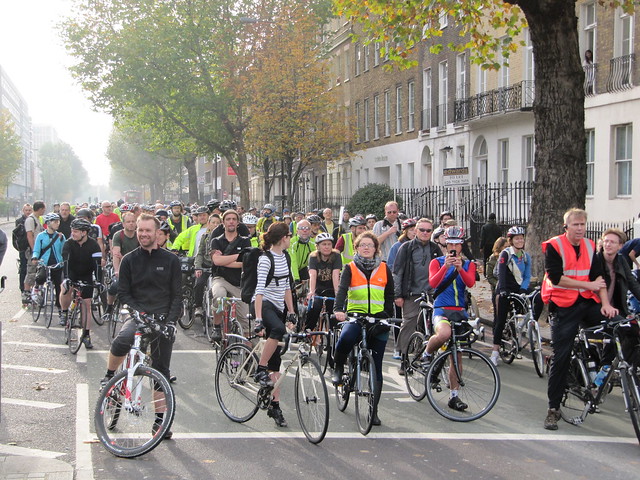
The "Tour du Danger" around London's 10 most dangerous junctions for cyclists. Here the ride is seen outside TfL HQ on Blackfriars Rd - now the site of the north / south cycle superhighway.
London’s anger
at those deaths, and others, helped to spur our cycling community on. This helped to achieve genuine political
commitment and action from Mayor Boris Johnson.
Protests on Blackfriars Bridge and around dangerous junctions lead to
really meaningful change. Hours of
meetings with politicians and their advisors helped to guide policy and new
street designs. But it should never have
taken so many deaths for this process to start.
Now we’re
seeing the result of that commitment with hard-won bike tracks and re-designed
junctions appearing across London, most contentiously along the
Embankment. Credit where credit is due;
the North / South and East / West Cycle Superhighways is going to change the
way we cycle in the city, and for good.
But resistance
was ferocious, well-organised and – in the case of the taxi lobby and CanaryWharf Group – incredibly well-funded.
Those same opposing forces are still out there, making their backwards-thinking
grievances an issue for the next Mayor of London.
People who
want a liveable London must remain focused (and angry), and Mayors must not be
afraid to be bold. Do not underestimate
the change that committed citizens together with committed leaders can bring
about.
I recommend
you to the London Cycling Campaign and their Sign4Cycling Mayoral target, and
to my fellow bike blogger Danny, at Cyclists In The City, who so often has been
“a partner in crime” in campaigning escapades.
So it’s
goodbye ibikelondon blog, and hello to exciting, new Strategic Cities. Through the years what has often kept me going
have been the wonderful interactions – both online and off – with people like
you who have read my words here. Thank
you. I hope you’ll come with me on my
new adventure, and that there are many safe and wonderful bike rides ahead for
us both.
Share